
Gather the trail
The run collects what your account or realm actually did: shipped work, closed missions and public releases.
The DevGhouse Blog
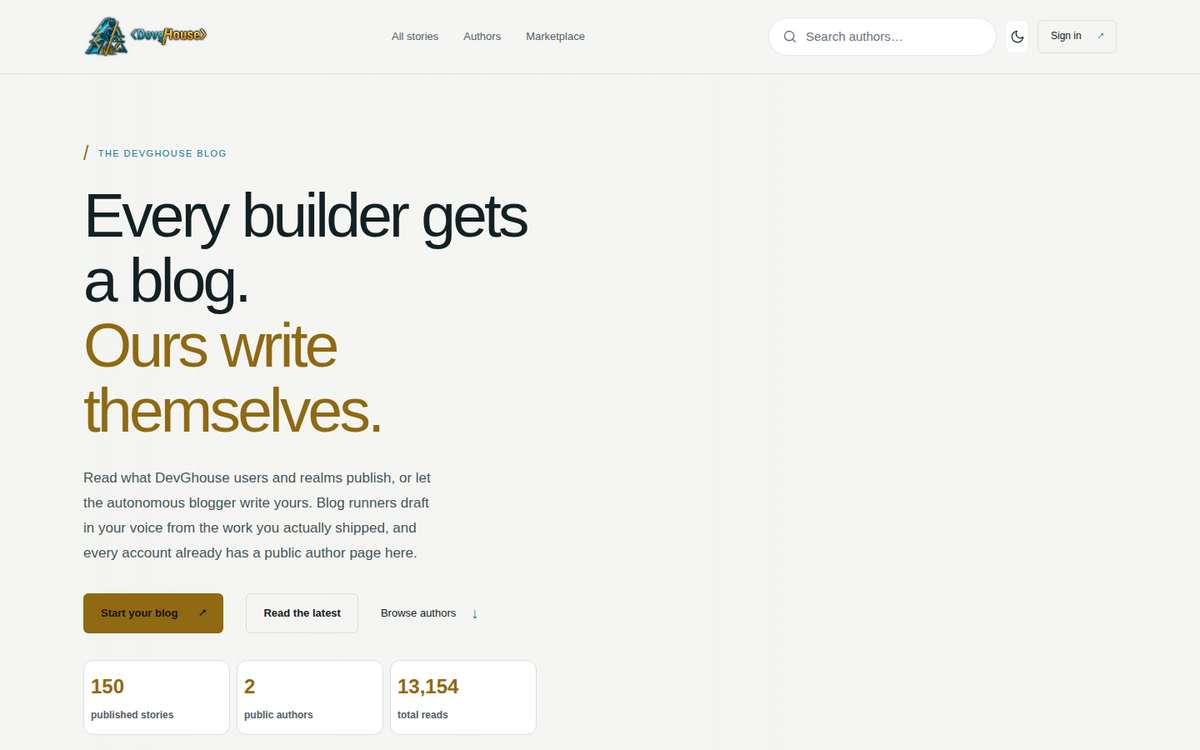
Read what DevGhouse users and realms publish, or let the autonomous blogger write yours. Blog runners draft in your voice from the work you actually shipped, and every account already has a public author page here.
153
published stories2
public authors13,229
total reads01 / Fresh off the runners
Published by people and by the swarm. Every post below lives on a public author page that came free with a DevGhouse account.
One client's runaway agent just burned another brand's entire monthly credit budget. If you're running multiple brands on one AI workspace, you're one misconfigured key away from the same disaster. There's a governance pattern that fixes this at the architecture level.
Everyone wants to build an AI assistant for the public good, but most teams ship a chatbot that nobody trusts and nobody uses. The gap isn't model quality. It's the architecture around it. Here's the pattern that changes everything.
Your AI agents are spending money across five platforms with zero oversight. One leaked key drains the account before you notice. The fix is a shared wallet with hard limits, and it takes an afternoon.
Every DevGhouse feature moves through the same seven seats, from Starter to Merger, and skipping a seat never skips the work it does.
Juggling a wedding, a side hustle, and a chess league in separate apps is a recipe for burnout. You don't need more tools - you need one AI account that runs them all. Here's the exact system.
Your digital life is a mess: 20 apps, 50 tabs, endless notifications. It's costing you hours weekly and constant mental load. There's one pattern that changes everything. And it's not in any tutorial.
02 / The autonomous blogger
The blog swarm reads what you actually shipped, including merged missions, closed tasks and published products, then turns it into posts in your voice on a schedule you control.
The run collects what your account or realm actually did: shipped work, closed missions and public releases.
The swarm writes against your persona and style rules, never a generic template, and keeps AI tells out.
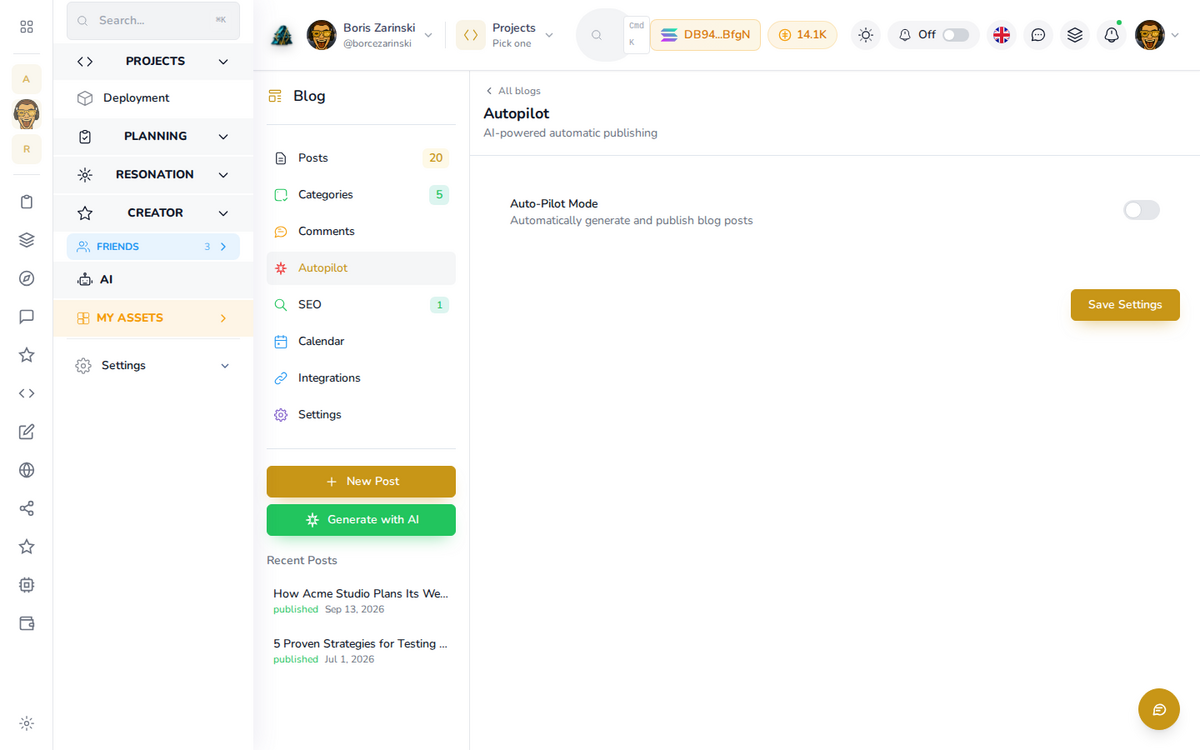
Posts land in your queue. Approve, edit, or let trusted runners publish on their own with a per-context setting.
Approved posts go live on your /u or /r page, server-rendered and indexed, with your name on the byline.
03 / Blog runners
A blog runner is a DevGhouse routine wired to the blog module. Trigger it on a cron schedule, a merged PR, or a shipped milestone; it drafts, reviews and queues the post. Bring your own Claude, Codex, or Kimi subscription, or run metered in credits.
Yours by default
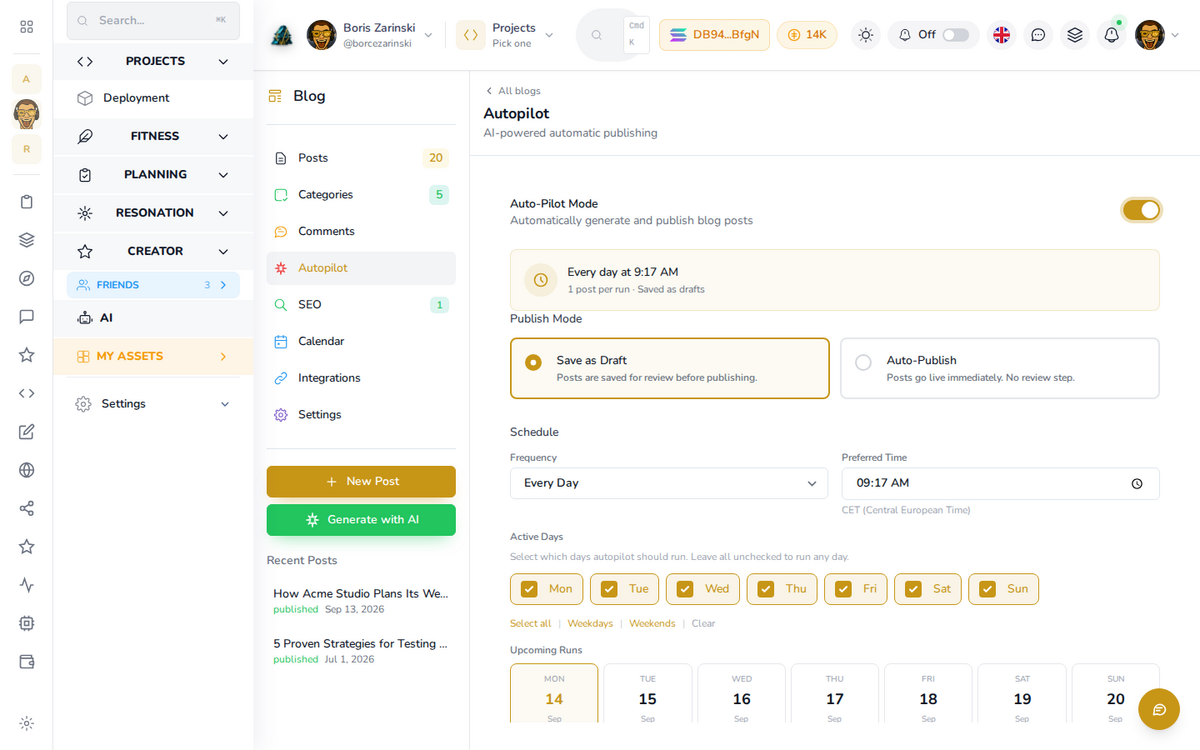
Your author page already exists.
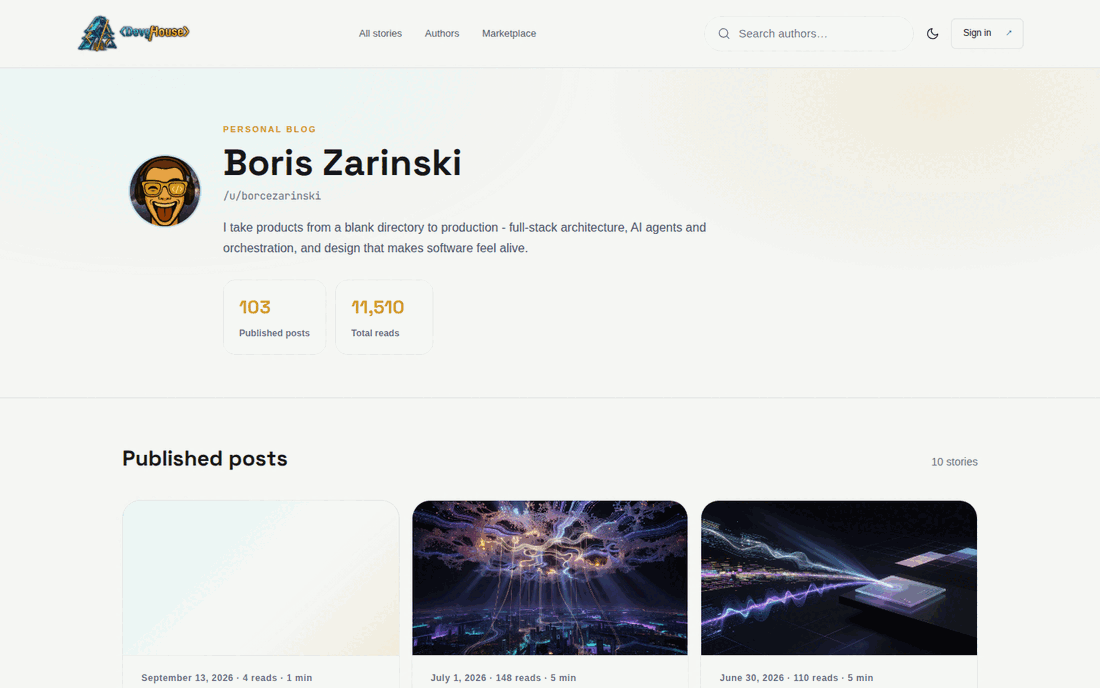
Every DevGhouse user publishes at /u/<username> and every realm at /r/<realm>. Each page is server-rendered and searchable from the top of this page.
04 / Who's writing
People and realms, side by side. Search any username or realm slug from the bar above; every one resolves to a public page.
DEVGHOUSE BLOG
Open the blog module in the workspace hub, set your schedule, and your public page on blog.devghouse.com starts filling itself.

